
Study Pods for University Libraries
Posted on 07 September 2026
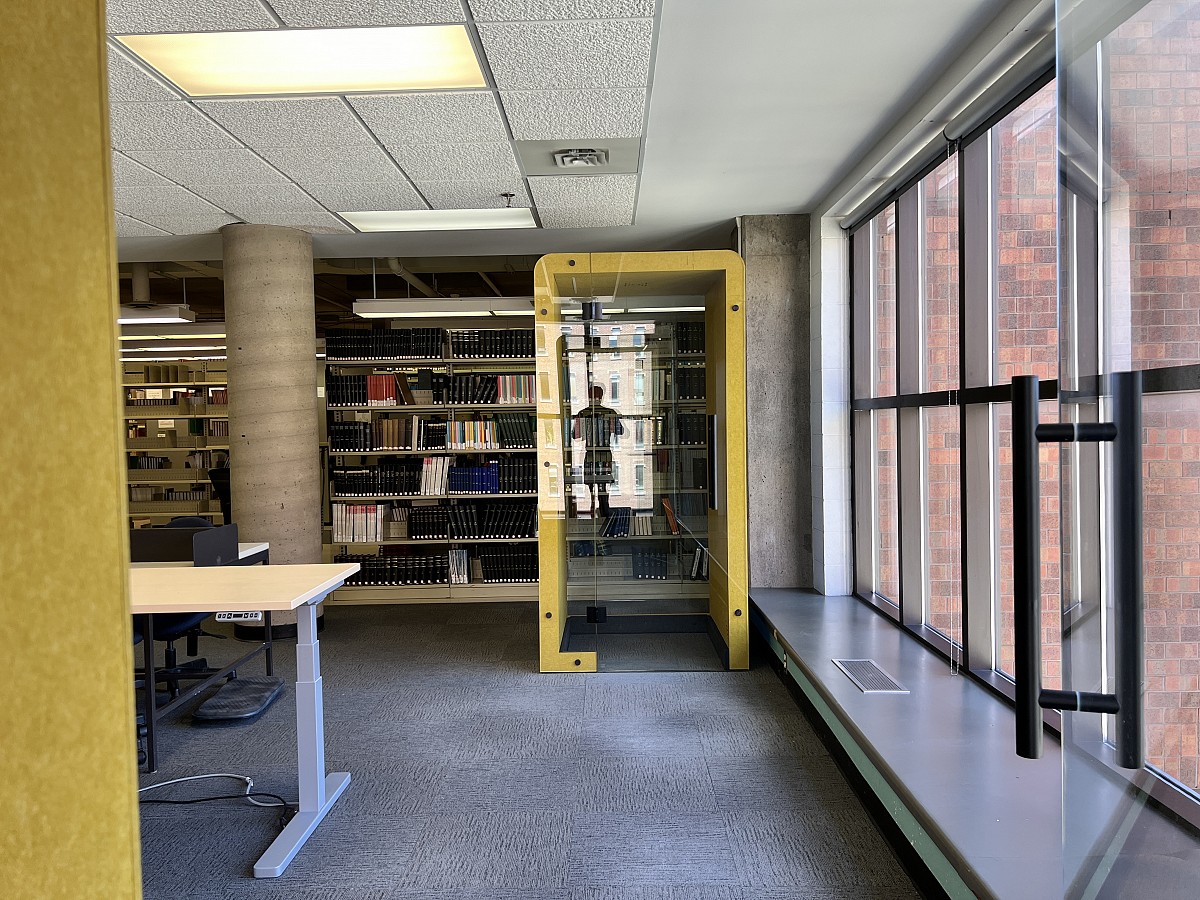
University libraries stopped being quiet reading rooms a long time ago. They're now where students take online classes, sit graduate interviews, rehearse presentations and work in groups, often all in the same room at the same time. Most libraries were not designed for that.
The usual answer is renovation, which is expensive, slow, and often impossible in a heritage building. Acoustic study pods offer a different route: self-contained rooms that arrive ready to use, need no construction, and can be moved when the space changes.
The Growing Demand for Flexible Library Spaces
Modern students expect learning environments that support a variety of activities throughout the day. They may need a quiet place to prepare for exams, a private space for an online interview, or a collaborative setting for group assignments.
Traditional library layouts often struggle to accommodate these competing needs. Constructing additional rooms can be expensive, time-consuming, and difficult within existing buildings.
Modular booth systems allow universities to maximize underutilized space by creating purpose-built environments that can be installed quickly and reconfigured as campus requirements evolve.
Creating Quiet Study Areas That Improve Student Success
One of the greatest challenges facing university libraries is providing enough distraction-free environments for focused learning.
Acoustic study pods create dedicated quiet study areas where students can:
Prepare for exams
Complete coursework
Attend online lectures
Participate in virtual interviews
Record presentations
Focus without interruptions
Unlike open seating areas, enclosed pods provide privacy and acoustic comfort, helping students concentrate even during the busiest periods of the academic year.
Supporting Student Collaboration Spaces
Learning has become increasingly collaborative, with group projects, presentations, and hybrid meetings playing an important role in higher education.
Modular booths create flexible student collaboration spaces that allow small teams to work together without disturbing nearby study areas.
These spaces are ideal for:
Group assignments
Project planning
Faculty meetings
Peer tutoring
Virtual collaboration
Presentation rehearsals
By offering dedicated collaborative environments, libraries can better balance quiet study with active learning.
Private Spaces for Virtual Learning and Calls
Hybrid education has made video conferencing a routine part of university life.
Students frequently require private spaces for:
Online classes
Graduate interviews
Career counselling sessions
Internship interviews
Meetings with professors
Remote research collaborations
Instead of occupying larger meeting rooms, acoustic booths provide comfortable, technology-ready spaces designed specifically for private conversations and virtual communication.
Enhancing Campus Furniture With Functional Spaces
Modern campus furniture is no longer limited to desks, tables, and seating.
Universities are increasingly investing in adaptable solutions that improve both functionality and student experience.
Modular booth systems complement existing library layouts by introducing:
Individual focus pods
Small meeting rooms
Phone booths
Collaboration pods
Wellness and decompression spaces
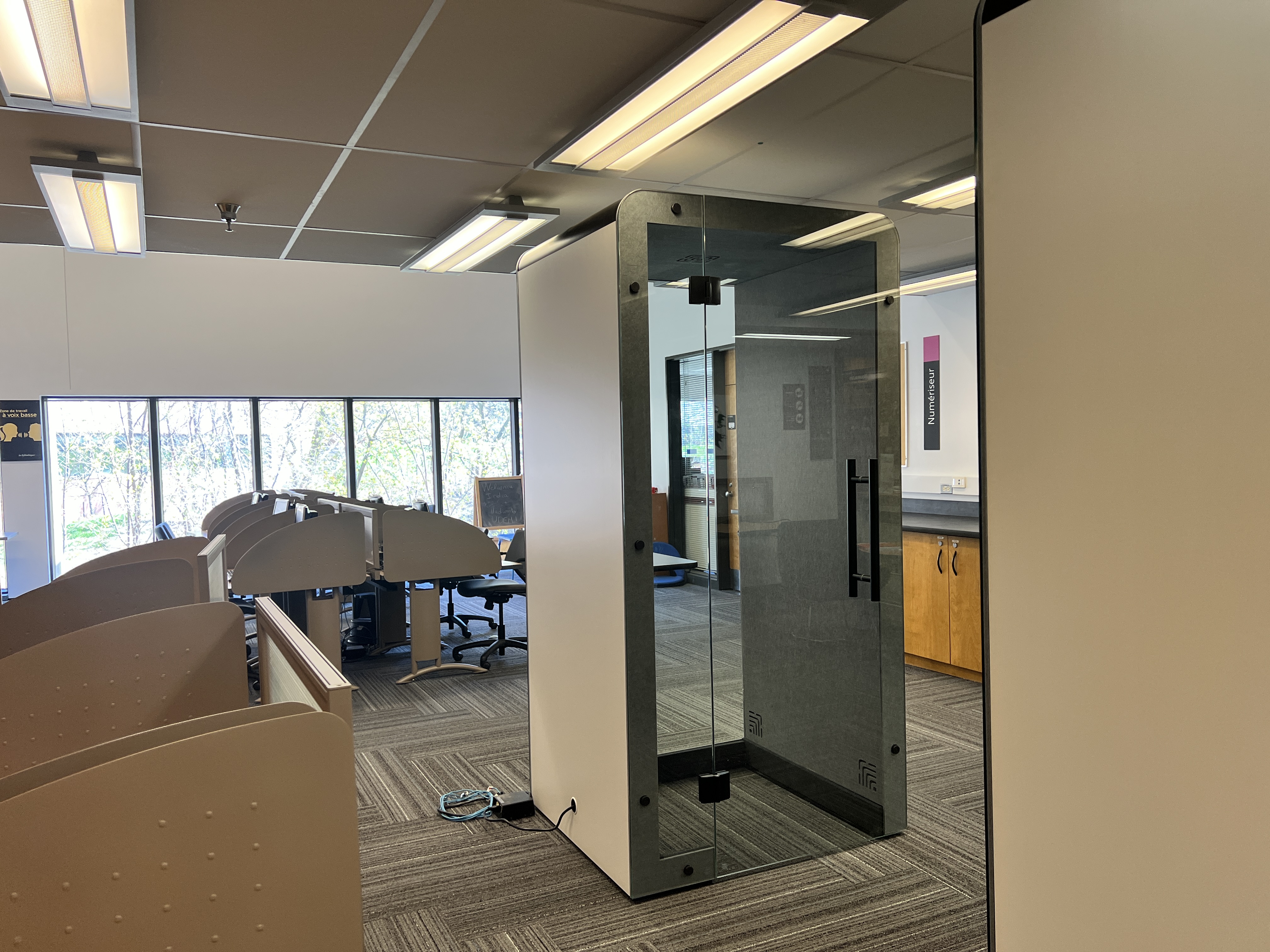
Because they are freestanding structures, they can often be installed without altering the building itself, preserving existing infrastructure while expanding usable space.
Smarter Education Facility Planning
Campus requirements change constantly.
New academic programs, growing enrolment, and evolving learning methods require facilities that can adapt over time.
For professionals involved in education facility planning, modular booths offer several long-term advantages:
Faster installation than traditional construction
Minimal disruption to campus operations
Relocatable and reconfigurable designs
Scalable solutions for future expansion
Lower lifecycle costs compared to permanent renovations
This flexibility helps universities respond quickly to changing demands while making efficient use of existing buildings.
Modular Space Solutions for Existing Campuses
Many university buildings—particularly heritage libraries and older academic facilities—have limited opportunities for structural renovations.
Modular space solutions allow institutions to introduce modern learning environments without major demolition or lengthy construction projects.
Whether installed in libraries, student centres, faculty buildings, or learning commons, acoustic booths provide an efficient way to create additional functional space while preserving the character of existing facilities.
Universities already using Kubebooth
Our pods are installed at the University of Toronto, Université de Montréal, and the University of British Columbia, along with Sheridan College, George Brown College, and Collège Boréal.
For individual quiet study, the KSelfi fits into corners and alcoves that a study room never could. For group work and peer tutoring, the Kwe seats two and extends to four, six or eight as demand grows. Both are manufactured in Toronto and arrive on casters, so installation means positioning them and plugging them in.
Future-Proof Your University Library
Every campus is different, and the right mix of individual and group pods depends on your building and your students. Request a quote and we'll help you work out what fits.