
Acoustic Solutions for Modern Offices
Posted on 25 February 2026
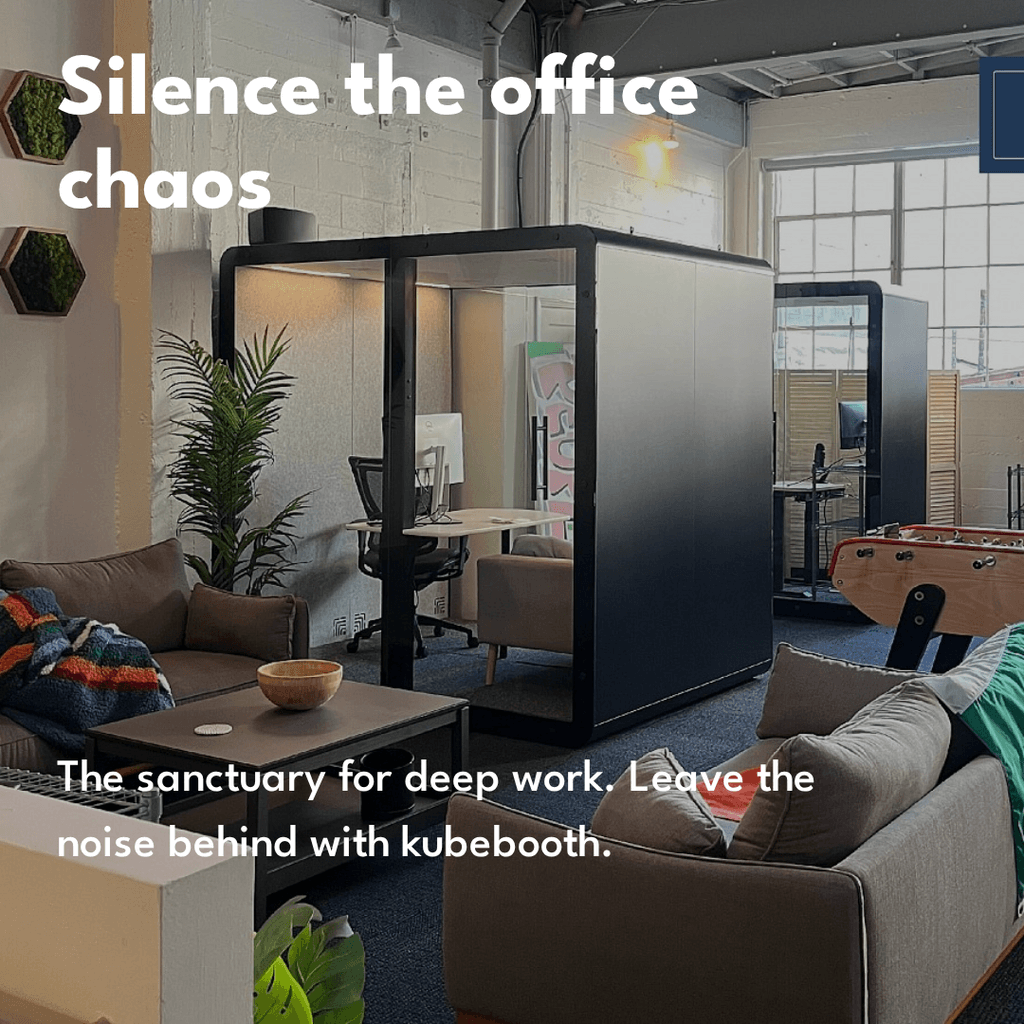
How to Reduce Noise, Improve Focus, and Build High-Performance Workspaces
Modern offices were designed to encourage collaboration.
But in the process, many lost something essential: acoustic control.
Open-plan layouts, glass walls, exposed ceilings, and dense seating arrangements have created environments where noise travels freely, and focus becomes difficult.
In 2026, acoustic strategy is no longer an afterthought. It is a foundational component of workplace performance.
This comprehensive guide explains:
- Why office noise is such a major problem
- The science behind sound and cognition
- The types of office noise you must address
- The most effective acoustic solutions available
- How to build a layered strategy
- When to use acoustic pods vs passive treatments
- How to calculate ROI
If your office struggles with distractions, call overlap, or meeting room shortages, this guide is for you.
Why Office Noise Is a Hidden Productivity Killer
Noise is not just an annoyance.
It is a measurable cognitive disruptor.
Unlike visual distractions, the human brain is biologically wired to process speech automatically. Even when we try to ignore background conversations, our brains continue decoding them.
This creates what psychologists call the irrelevant speech effect, a phenomenon in which background conversations reduce working memory and reading comprehension.
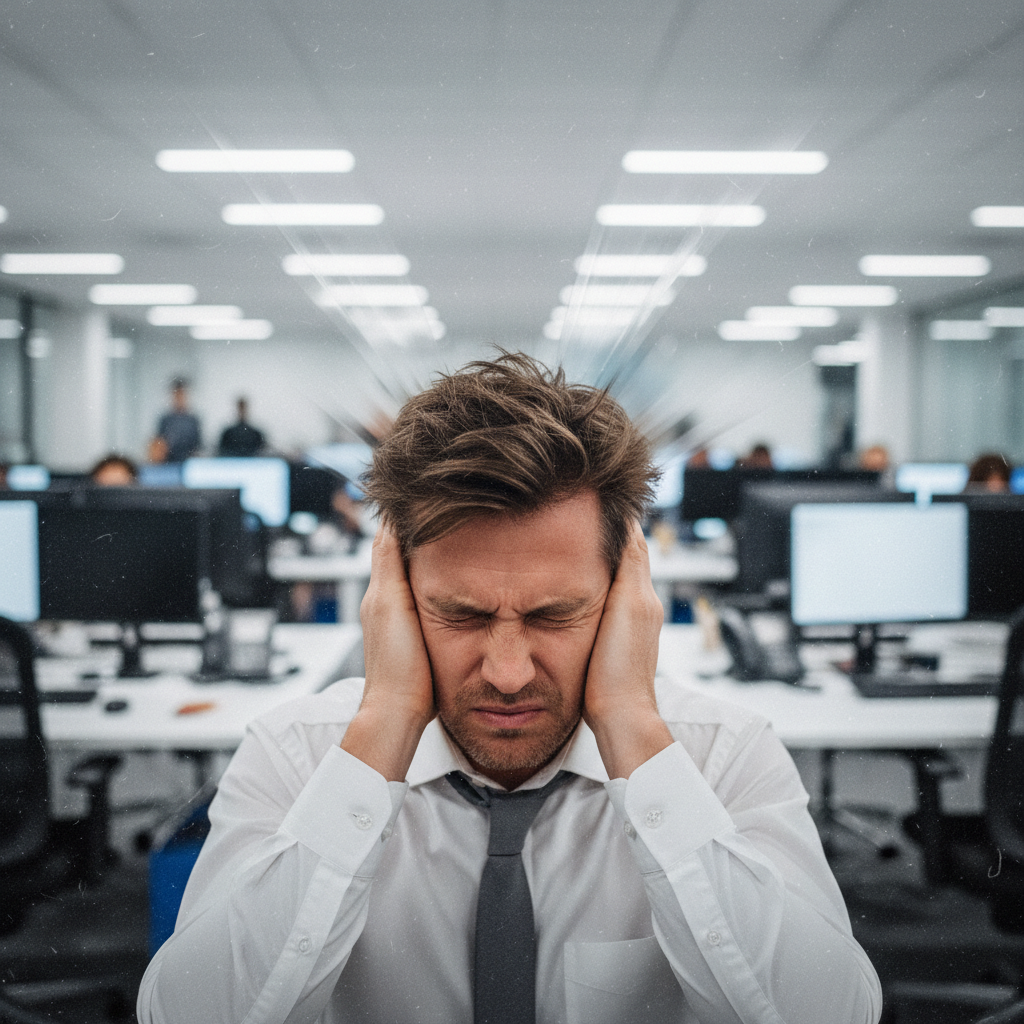
The Real Impact of Office Noise:
- Increased stress hormones
- Slower task completion
- More errors
- Higher fatigue
- Reduced creativity
- Decreased job satisfaction
Employees in noisy environments often report:
- “I can’t focus.”
- “I leave the office drained.”
- “I take calls from my car.”
That’s not a culture issue.
That’s an acoustic failure.
1. Airborne Noise
This is the most common type.
Examples:
- Conversations
- Phone calls
- Video meetings
- Laughter
- Background chatter
Airborne noise travels through open air and reflects off hard surfaces.
Open ceilings, glass partitions, and polished floors amplify this effect.
2. Structure-Borne Noise
This travels through building materials.
Examples:
- Footsteps
- Chair movement
- Desk vibrations
- HVAC systems
Even well-treated offices can struggle if vibration travels through the flooring or walls
3. Impact Noise
Created by physical contact.
Examples:
- Doors slamming
- Objects dropping
- Keyboards
- Printers
Each noise type requires different interventions.
Why Open Offices Amplify Noise
Modern office trends unintentionally worsen acoustics.
1. Hard Surfaces
Glass walls and concrete floors reflect sound rather than absorb it.
2. Open Ceilings
Exposed ductwork increases reverberation time.
3. High Density
More people = more speech overlap.
4. Hybrid Work
Simultaneous video calls multiply speech levels.
The result is not just “loud.”
It is cognitively overwhelming.
The Science of Acoustic Stress
Noise affects both psychological and physiological systems.
When exposed to unpredictable speech:
- The brain’s attention system activates.
- Cortisol levels rise.
- Cognitive resources are diverted.
Over time, chronic exposure contributes to:
- Burnout
- Irritability
- Reduced problem-solving ability
Silence is not the goal.
Controlled sound is.
Core Acoustic Metrics You Must Understand
Before investing in solutions, understand these key measurements.
STC (Sound Transmission Class)
Measures how well a structure blocks sound.
- STC 30 → Speech understood
- STC 35 → Loud speech muffled
- STC 40+ → Speech unintelligible
For enclosed meeting pods or booths, aim for a minimum STC of 35–40.
NRC (Noise Reduction Coefficient)
Measures how much sound a material absorbs.
- 0.0 = absorbs nothing
- 1.0 = absorbs all sound
Ceiling panels typically range from 0.6 to 0.9.
Reverberation Time (RT60)
Measures how long sound lingers in a room.
Longer reverberation = echo and speech overlap.
Lower RT60 improves clarity and reduces fatigue.
The Three Categories of Acoustic Solutions
To design effectively, solutions must be layered.
There are three main categories:
- Absorption
- Blocking
- Isolation
Each serves a different purpose.
Category 1: Acoustic Absorption Solutions
These reduce sound reflections inside a space.
They do not block sound between rooms, they control echo.
1. Acoustic Ceiling Panels
Highly effective in open offices.
Benefits:
- Reduce reverberation
- Improve speech clarity
- Lower overall noise density
Ideal for:
- Open desk areas
- Coworking spaces
- Collaborative zones
2. Wall Panels
Fabric-wrapped acoustic panels absorb mid- and high-frequency speech.
Placement matters:
- Opposite reflective surfaces
- Near collaboration zones
- Behind workstations
3. Acoustic Carpeting
Carpets absorb impact noise and reduce structure-borne transmission.
Especially helpful in high-traffic areas.
4. Acoustic Baffles & Clouds
Suspended panels reduce echo in spaces with exposed ceilings.
They improve sound quality without fully closing ceilings.
When Absorption Is Enough
Absorption works well for:
- Reducing general noise levels
- Improving speech clarity
- Managing echo
But it does not provide privacy.
For privacy, you need blocking and isolation.
Category 2: Sound Blocking Solutions
Blocking prevents sound from travelling between spaces.
1. Glass Partitions with Acoustic Lamination
Acoustic laminated glass reduces sound transmission compared to standard glass.
Best used in:
- Executive offices
- Conference rooms
2. Sealed Doors & Frames
Doors are often the weakest acoustic link.
Proper seals significantly improve performance.
3. Wall Insulation Upgrades
Adding dense insulation materials improves STC ratings.
However, this requires construction and disruption.
Limitations of Blocking
Blocking solutions are:
- Expensive
- Permanent
- Time-consuming
- Difficult to modify
This is why modular isolation solutions are rising.
Category 3: Acoustic Isolation (The Most Effective for Privacy)
Isolation means fully enclosing the sound source.
This is where acoustic office pods and booths dominate.
Acoustic Office Pods & Phone Booths
Enclosed pods combine:
- Sound-absorbing interior panels
- Sealed doors
- Acoustic glass
- Insulated frames
- Active ventilation
They isolate speech at the source.
Instead of trying to treat an entire office, you isolate the activity generating noise.
This is more efficient.
When to Use Acoustic Pods
Pods are ideal when:
- Video calls are frequent.
- Meeting rooms are overbooked.
- Confidential discussions occur
- Employees need deep focus.
Companies like Kubebooth design enclosed pods that meet commercial acoustic standards while remaining modular and relocatable.
Pods transform acoustic chaos into controlled zones.
Acoustic Pods vs Traditional Construction
Let’s compare.
| Timeline | Weeks | Hours |
| Permits | Required | Often not |
| Flexibility | Permanent | Relocatable |
| Cost | High | Moderate |
| Disruption | Major | Minimal |
Pods provide:
- Immediate privacy
- Predictable acoustic performance
- Scalability
Many organizations outperform construction upgrades.
Building a Layered Acoustic Strategy
The best acoustic design is layered.
Never rely on one solution.
Step 1: Treat Open Areas
Install:
- Ceiling panels
- Carpet
- Wall absorption
Reduce overall noise density.
Step 2: Zone Your Layout
Separate:
- Collaboration zones
- Quiet zones
- Phone zones
Zoning reduces overlap.
Step 3: Install Enclosed Pods
Use pods for:
- Calls
- Focus sessions
- Private meetings
This isolates noise at its source.
Step 4: Monitor & Optimize
Advanced pods, including those offered by Kubebooth, integrate smart sensors that monitor usage and air quality.
This allows facility managers to:
- Adjust placement
- Identify peak demand
- Optimize layout
Acoustic design becomes data-informed.
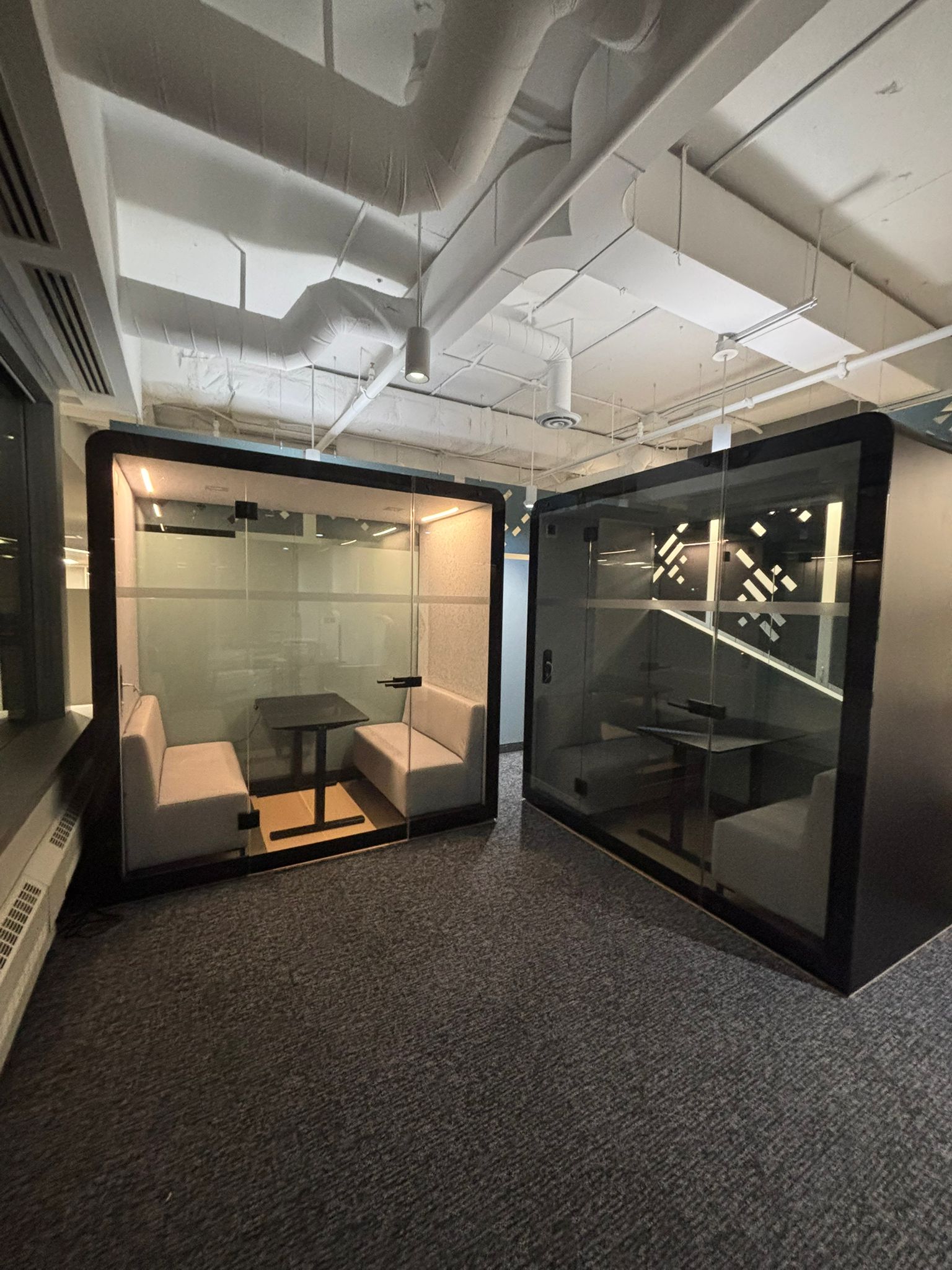
Case Study Scenario (Before & After)
Before:
- Employees taking Zoom calls at desks.
- Constant speech overlap
- Meeting rooms fully booked
- Complaints rising
Intervention:
- Install 6 single-person acoustic pods.
- Add ceiling baffles
- Define a quiet zone
- Upgrade carpeting
After:
- Reduced ambient noise
- Increased meeting efficiency
- Improved employee satisfaction
- Fewer HR complaints
Small, targeted interventions can have a significant impact.
Acoustic Design for Different Office Types
Tech Companies
High video-call density.
Priority:
- Single-person pods
- Strong STC ratings
- Ventilation for extended calls
Law Firms
Confidentiality critical.
Priority:
- Higher STC enclosed pods
- Sealed meeting pods
Healthcare Administration
Sensitive discussions.
Priority:
- Isolated privacy spaces
- Acoustic zoning
Coworking Spaces
Multiple companies sharing space.
Priority:
- Durable pods
- Strong isolation
- Clear zoning
Common Acoustic Mistakes
- Treating acoustics as aesthetic
- Installing absorption, but no isolation
- Ignoring ventilation in enclosed spaces
- Choosing the lowest-cost pods
- Overlooking STC certification
Acoustic design must be engineered, not improvised.
The ROI of Acoustic Solutions
Executives want numbers.
Here’s how acoustics pay off.
1. Productivity Gains
Even minor reductions in distraction significantly improve output.
More focus time = more deliverables.
2. Reduced Real Estate Expansion
Pods reduce the need for building new meeting rooms.
3. Improved Employee Retention
Privacy improves job satisfaction.
4. Enhanced Client Experience
Clear audio during calls improves professionalism.
The Future of Acoustic Offices
Offices are becoming:
- Modular
- Data-driven
- Hybrid-ready
- Wellness-focused
Acoustic infrastructure will include:
- Smart pods
- Dynamic sound masking
- Environmental dashboards
- Flexible zoning systems
Companies investing now will outperform those treating noise as a minor inconvenience.
Final Thoughts
Acoustic control is not optional.
It is foundational to:
- Focus
- Wellbeing
- Collaboration
- Hybrid performance
- Professionalism
Modern offices must balance openness with privacy.
The most effective strategy combines:
- Absorption
- Blocking
- Isolation
And for immediate, scalable isolation, enclosed acoustic pods , such as those developed by Kubebooth, offer one of the most efficient solutions available today.
The goal is not silence.
It is control.
Because high-performing workplaces are not the loudest.
They are the most acoustically intelligent.
Not sure which approach fits your space? Request a quote and we'll help you work through the options.