
Privacy Pods for Architects & Designers: Flexible, Acoustic Micro-Spaces Without Construction
Posted on 17 December 2025
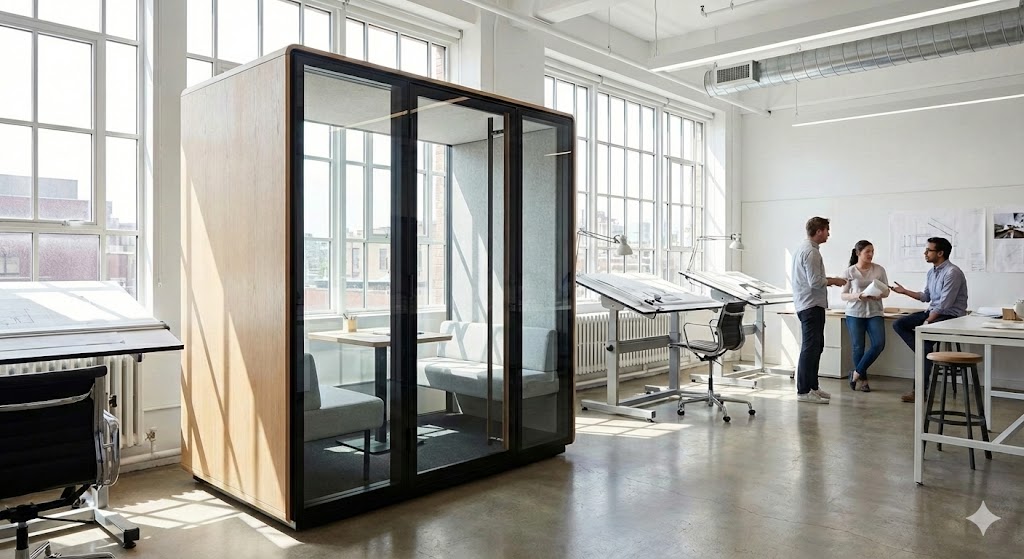
Privacy Pods for Architects & Designers
Open-plan workplaces aren’t going away—but expectations have changed. Clients still want collaboration and transparency, yet now they also demand speech privacy, focus zones, and spaces for video calls that don’t hijack meeting rooms.
Traditionally, the answer was construction: add rooms, add walls, rework MEP, accept delays. But most projects today face tighter timelines, tighter budgets, and workplaces that evolve every year.
That’s why more designers are integrating privacy pods as a furniture-based layer of architecture: micro-spaces that bring real privacy and acoustic relief to open plans—without reworking the building.
What privacy pods solve in modern workplace programs
Privacy pods typically cover the “daily friction” spaces that clients rarely program well at the start:
- Video/phone calls (especially in hybrid teams)
- Focused work sprints (20–60 minutes)
- Quick 1:1s and sensitive conversations
- Overflow when meeting rooms are booked
- Neurodiversity-friendly quiet moments (in some workplaces) Designers love them because they deliver outsized impact without requiring a full plan redesign.
Pods vs. built rooms: the architect’s reality check
Built rooms are excellent when you know the layout will stay fixed and the client wants permanent, integrated construction. But they also come with trade-offs: schedule risk, permitting complexity, trades coordination, dust/disruption in occupied spaces, and the fact that the client can’t “take it with them” when they move.
Privacy pods work best when the project needs:
- speed (install without construction)
- flexibility (move/reconfigure later)
- predictable scope (clear deliverable with fewer on-site variables)
- fast acoustic relief in open areas
In many projects, the smartest approach is hybrid: keep construction for core enclosed rooms, and use pods to distribute privacy across the floor.
How designers integrate pods so they feel intentional (not “dropped in”)
The difference between a pod that looks like a leftover object and a pod that feels designed is usually four decisions:
1) Program it properly
Don’t call it “a pod.” Call it what it is in the program:
- Focus Booth
- Call Booth
- Quiet Room (micro)
- Interview/Wellbeing Booth
- Two-person Huddle Booth
That single choice improves client buy-in and end-user adoption.
2) Place it where it will be used
Good placement increases usage and reduces noise spillover.
Best practice placements:
- near open work zones (close to the pain point)
- along perimeters or edges (calmer, more private feeling)
- adjacent to teams with frequent calls (support, sales, HR)
- in “dead zones” of the plan (awkward corners that can become useful)
3) Coordinate finishes like you would any other architectural element
Pods should harmonize with the palette, not fight it. A clean approach:
- match neutrals to key millwork or flooring tones
- use the pod as a purposeful “anchor” element (like a feature piece)
- keep surrounding area minimal to reduce visual clutter
4) Think comfort like a designer, not like a spec sheet
People avoid uncomfortable pods. Comfort is the hidden adoption driver:
- ventilation that feels fresh during longer sessions
- lighting that works for video calls (no harsh shadows)
- power access that doesn’t require awkward cable routing
- a layout that doesn’t feel cramped
What to consider when specifying privacy pods
When you’re detailing pods into a project, your spec checklist should focus on real-world performance—not buzzwords.
Acoustic intent (what “quiet” actually means)
Most clients don’t need silence. They need speech privacy and reduced disruption. Set expectations clearly:
- “This provides a private environment for calls and focus.”
- Avoid framing pods as “fully soundproof” unless you can verify specific tested claims from the manufacturer.
Ventilation and airflow
A pod that feels stuffy becomes a one-minute booth, not a 30-minute space.
Power + usability
Designers should confirm:
- outlets/USB placement
- any integrated lighting controls
- cable management options
Footprint + clearance
Plan for real circulation and door swing clearance. Pods that block flow become hated fast.
Serviceability
Ask: What happens if a fan, light, or component needs replacement? Simple access matters.
Why clients like pods (and why they approve them faster)
From the client’s point of view, pods reduce risk:
- less disruption in occupied spaces
- faster implementation
- flexibility for future changes
- reduced pressure on meeting rooms
- improved employee experience without changing the whole office
Where KubeBooth fits
KubeBooth is designed to help architects and designers add privacy and acoustic relief with a clean, modern presence—without committing the client to permanent construction.
Because the “right model” depends on the floor plan and program, we typically guide selection based on:
- primary use case (calls, focus, quick huddles)
- available footprint and clearance
- expected daily usage level
- desired aesthetic integration
Need pods integrated into your plan?
Request layout guidance + product details for your project. We’ll help you match the right solution to your space, program, and timeline.